
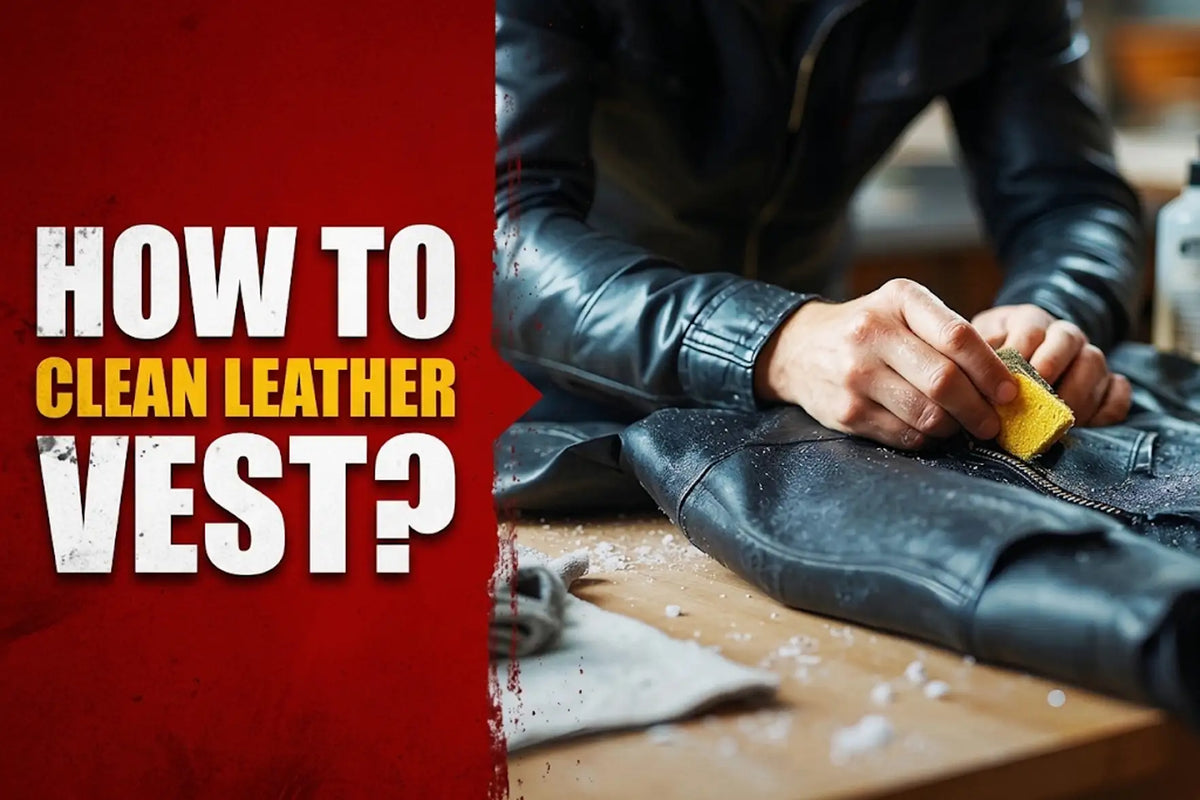
How to Clean a Leather Vest
To clean a leather vest, brush off the dry dirt, then wipe it in small sections with a microfiber cloth dampened in distilled water and a few drops of mild soap. Wipe away the soap residue with a second damp cloth, let the vest air dry away from heat and direct sun, then work in a thin coat of leather conditioner. Never machine wash or soak leather, and use a dry method for suede or nubuck. A full clean every 3 to 6 months, with spot cleaning in between, keeps a riding vest supple for years.
Leather motorcycle vests take everything the road throws at them: dust, bug splatter, sweat, rain, chain spray and the odd spilled drink at a rally. Cleaned the right way, a quality vest lasts for decades and only looks better with age. Cleaned the wrong way, it can shrink, stiffen, fade or crack after a single wash.
This guide from the Born To Race team walks you through each step in detail. It covers the supplies worth having, how to remove specific stains, and how to treat the parts that make a riding vest different from a jacket: patches, perforations, concealed-carry pockets, side laces and hardware.
What You'll Need to Clean a Leather Vest
You don't need a shelf full of specialty products. A basic kit handles almost every job:
-
3 or 4 soft microfiber cloths, white or light-colored so you can see any dye transfer
-
Soft-bristle or horsehair brush for seams, stitching and patches
-
Old soft toothbrush and cotton swabs for perforations, snaps and tight corners
-
Distilled water. Tap water can leave mineral spots and white rings on leather.
-
Mild soap, such as unscented baby shampoo, castile soap or a drop of gentle dish soap
-
pH-balanced leather cleaner or saddle soap for heavier road grime
-
Leather conditioner, such as a lanolin, beeswax or cream-based formula
-
Cornstarch or talcum powder for grease and oil stains
-
Distilled white vinegar for mildew
-
Suede brush and suede eraser, if your vest is suede or nubuck
-
Wide padded hanger and a clean towel for drying
How to Clean a Leather Vest: Step-by-Step
Set aside about an hour of work, plus drying time overnight. Work in daylight if you can, so you can see dirt and color changes clearly.
Step 1: Read the Care Label and Identify the Leather
Check the tag inside the vest first. It usually names the leather type and any treatments to avoid. Most riding vests are full-grain or top-grain cowhide with a protective finish, which handles careful damp cleaning well. If the surface is fuzzy or velvety, it's suede or nubuck, and you should skip to the suede section below. Not sure? Put one drop of water on a hidden spot. If it beads up, the leather is finished. If it soaks in and darkens, it's unfinished or aniline and needs extra care.
Step 2: Prep the Vest
Empty every pocket, including inside and concealed-carry pockets. Remove any back protector or armor inserts and unzip any removable liner. Lay the vest flat on a clean towel or hang it on a wide hanger at chest height.
Step 3: Brush Off Dry Dirt and Dust
Wipe the whole vest with a dry microfiber cloth. Then use the soft brush along seams, stitching, the collar, armholes and the edges of patches, where road grit and lint collect. Use a toothbrush or cotton swab for perforations, snaps and zipper teeth.
This step matters more than people think. If you add moisture first, grit gets ground into the grain like sandpaper.
Step 4: Mix a Mild Cleaning Solution
Add 2 or 3 drops of mild soap to a bowl of lukewarm distilled water and swirl it gently. Dip a microfiber cloth in, then wring it out until it's barely damp, not dripping.
For heavier grime, use saddle soap or a pH-balanced leather cleaner instead. Follow the label, and always apply it to the cloth, never directly to the vest.
Step 5: Patch Test a Hidden Spot
Try your solution on the inside hem, under an armhole or behind a side lace. Let it dry for a few minutes. If color comes off on the cloth, or the leather darkens, stiffens or loses its finish, switch to a gentler method. This one-minute check prevents most cleaning mistakes, especially on dyed, distressed or waxed leather.
Step 6: Wipe the Vest in Sections
Start at the top and work down in small sections, about the size of your hand. Use light, overlapping circular strokes. Give extra attention to the collar, armholes and lower front panel, where hands, belts and sweat do the most damage. Rinse and wring the cloth often so you're lifting dirt, not spreading it.
Keep the cloth damp, never wet, and don't scrub. On perforated panels, dab instead of wiping so water doesn't settle in the holes.
Step 7: Remove the Soap Residue
Wipe the vest again with a second cloth dampened in plain distilled water. Leftover soap leaves a dull film and streaks, and it can dry out the leather. Then blot away surface moisture with a dry towel. Wipe snaps, buckles and zippers completely dry so they don't rust or tarnish.
Step 8: Air Dry Naturally
Hang the vest on a wide, padded hanger, or lay it flat on a dry towel, in a cool, shaded room with good airflow. A fan speeds things up safely. Keep it away from radiators, hair dryers, heat vents, car heaters and direct sun. Heat pulls the natural oils out of the hide and causes shrinking, stiffness and cracks.
Drying usually takes several hours to overnight. Don't move on until the leather feels completely dry, inside and out.
Step 9: Condition and Buff
Cleaning removes some of the leather's natural oils, and conditioning puts them back. Put a dime-sized amount of conditioner on a clean cloth, never directly on the vest. Massage a thin, even coat into the leather with circular strokes. Cover the back panel, front panels and edges, and work lightly around patches.
Let it absorb for 15 to 30 minutes, then buff off the excess with a dry cloth. Less is more: too much conditioner leaves leather sticky, attracts dust and can darken the color. For extra rain protection, finish with a light coat of leather protector once the conditioner has set.
How to Clean the Details That Make a Riding Vest Different
A motorcycle vest isn't just a sleeveless jacket. Its patches, vents, pockets and hardware each need a slightly different approach.
Vests With Patches, Rockers and Embroidery
Club patches, rockers and embroidered badges are what make mens leather biker vests personal. They're sewn through the leather, and their fabric backing soaks up sweat and smoke. To clean a leather vest with patches:
-
Brush around each patch with a soft brush. Don't pull on loose threads.
-
Clean the leather right up to the patch edge with a barely damp cloth, but don't soak the patch itself, or its colors may bleed into the leather.
-
Spot clean dirty patches with a cotton swab and a drop of mild soapy water, then blot dry.
-
Condition the leather around the patches lightly. Don't rub conditioner into the embroidery, because it leaves dark, greasy marks.
If a patch is irreplaceable or a vintage club piece, ask a leather specialist to clean it.
Perforated and Mesh-Panel Vests
Perforated leather keeps you cool on summer rides, but its holes trap dust, pollen and bug residue. Brush the panels first with a dry toothbrush, using a light tapping motion. Then dab, don't wipe, with a barely damp cloth so water can't pool in the holes. Dry it flat with a fan blowing across it. If you ride in the heat, our perforated leather motorcycle vests are built for airflow and easy to keep clean with this routine.
Concealed-Carry and Inside Pockets
Inside pockets collect lint, receipts, crumbs and gun oil. Turn them out and vacuum them with a brush attachment. Wipe the pocket lining with a cloth and mild soapy water, and dab gun oil marks with cornstarch first. Let the pockets dry completely before anything goes back in. Leather holster panels in concealed carry motorcycle vests need conditioning too, or the pocket opening can stiffen.
Side Laces, Snaps, Zippers and Buckles
-
Side laces: Unlace them if you can and clean each lace separately with the damp cloth method. Condition them, because dry laces snap.
-
Snaps and buckles: Clean around them with a cotton swab. Dry them fully to prevent rust and the green tarnish that stains leather.
-
Zippers: Brush grit out of the teeth with a toothbrush. If a zipper sticks, rub a bit of beeswax or a graphite pencil along the teeth.
The Lining
Most vests have a satin, polyester or cotton lining that sits against your shirt. It traps more sweat than the leather does. Wipe it with a cloth dampened in mild soapy water, working from the fabric side, and blot it dry. Many zip-out liners can be hand-washed separately, so check their label.
How to Remove Stains From a Leather Vest
Three rules apply to every stain. Act fast, before it sets. Blot, never rub, because rubbing pushes the stain deeper into the grain. And patch test any method on a hidden spot first.
|
Stain |
How to remove it |
|
Road grime and dust |
Dry brush, then the mild soap wipe from Step 6. |
|
Bug splatter |
Soften dried bugs for 1 to 2 minutes with a warm, damp cloth laid over them. Lift gently, then wipe clean. Never scrape. |
|
Grease, oil and chain lube |
Cover with cornstarch or talc and leave 4 hours or overnight. Brush it off, repeat if needed, then use leather cleaner. |
|
Gasoline |
Blot right away, then treat like grease. Air the vest outdoors to clear the fumes. |
|
Water spots and rain marks |
Dampen the whole panel evenly, seam to seam, with a barely wet cloth so the mark blends in. Dry naturally, then condition. Wetting only the spot leaves a ring. |
|
Salt and sweat lines |
Wipe with 1 part white vinegar to 1 part distilled water, then plain distilled water. Dry and condition. |
|
Mildew |
Brush off loose mold outdoors. Wipe with 1:1 white vinegar and water, dry fully in the shade, then condition. |
|
Ink |
Dab gently with a cotton swab and a little rubbing alcohol. Alcohol can lift dye, so test first and stop if color comes off. On light or aniline leather, see a pro. |
|
Food, beer and soda |
Blot, then wipe with the mild soap solution. For sugary spills, rinse with a distilled-water cloth so nothing stays sticky. |
|
Blood |
Blot with a cold, damp cloth. Never use hot water, which sets the stain. Then use leather cleaner. |
|
Gum or candle wax |
Hold an ice pack in a bag against it until it hardens, then gently lift it off with a fingernail or plastic card. |
|
Dye transfer from jeans |
Use leather cleaner on a cloth. Severe transfer on light leather needs a professional. |
What to Do If Your Vest Gets Soaked in the Rain
Blot off surface water with a towel as soon as you stop. Hang the vest on a wide hanger at room temperature, with a fan running, and stuff the pockets with paper towel to help them dry. Never use a heater or dryer. Once it's dry, condition it so the leather doesn't stiffen.
Know Your Leather: Cleaning Tips by Type
The same cleaning method doesn't suit every vest. Match yours below.
|
Leather type |
What it's like |
Cleaning approach |
|
Full-grain cowhide |
The toughest grade. Natural grain, ages into a patina. |
Mild soap or saddle soap, then regular conditioning. |
|
Top-grain cowhide |
Sanded and finished, so it's smoother and more stain-resistant. |
Mild soap or leather cleaner. Conditions easily. |
|
Naked, aniline or unfinished |
Soft, natural look. Absorbs water and darkens fast. |
Distilled water only, very little moisture. Test everything. |
|
Distressed, waxed or oiled |
Vintage look with an oily or waxy surface. |
Dry brush and damp cloth only. Re-wax rather than condition. |
|
Buffalo and horsehide |
Heavy, thick and pebbled. Common on vintage and heavy-duty vests. |
Saddle soap works well. Needs more conditioner than cowhide. |
|
Genuine or bonded leather |
Thinner and heavily processed. Can peel. |
Minimal water and a gentle cleaner. Never scrub. |
|
Suede and nubuck |
Napped, velvety surface with no shine. |
Dry methods only (see below). |
|
Faux or vegan leather (PU, PVC) |
Plastic coating over a fabric backing. |
Mild soap and water. No leather conditioner. |
How to Clean a Suede or Nubuck Vest
Water stains suede, so keep it dry:
-
Brush the whole vest with a suede brush in one direction to lift dirt and the nap.
-
Rub dry marks out with a suede eraser.
-
For oil, cover the spot with cornstarch overnight, then brush it away.
-
For stubborn marks, dab lightly with a cloth barely dampened in white vinegar. Let it dry, then brush the nap back up.
-
Finish with a suede protector spray, not a cream conditioner.
How to Clean a Faux Leather Vest
Wipe it with a cloth dampened in warm water and a little mild soap, then dry it with a towel. Avoid alcohol, acetone and heat, which can crack or peel the coating. Skip leather conditioner, since it doesn't absorb into plastic. A vinyl or faux-leather protectant keeps it supple instead.
Choosing the Right Leather Cleaner and Conditioner
|
Product |
Use it for |
Notes |
|
Mild soap and distilled water |
Routine cleaning |
The safest choice for most finished leather. |
|
pH-balanced leather cleaner |
Heavier grime, stubborn spots |
Made to clean without stripping the finish. |
|
Saddle soap |
Thick, heavy-duty hides |
Very effective, but can dry thinner leather. Always condition after. |
|
Cream or lotion conditioner |
Regular conditioning |
Light, absorbs quickly, and won't darken most leather. |
|
Lanolin or beeswax balm |
Conditioning plus water resistance |
Good before riding season. Buff well. |
|
Neatsfoot or mink oil |
Very dry, stiff or vintage leather |
Deeply softening, but darkens leather. Use sparingly. |
|
Leather protector spray |
After conditioning |
Adds water and stain resistance. |
Home Remedies to Avoid
Olive oil, coconut oil and other cooking oils soak in unevenly and can go rancid, leaving dark patches and a sour smell. Baby wipes and household wipes contain alcohol and fragrances that dry and dull leather. Glass cleaner, magic erasers and dish detergent strip the finish. Stick to products made for leather.
Common Mistakes That Ruin Leather Vests
-
Machine washing or tumble drying. Water, detergent, agitation and heat shrink, warp and crack the hide. The damage is permanent.
-
Soaking or dunking the vest. Water swells the fibers and strips the oils. Leather is only ever wiped.
-
Using bleach, ammonia, acetone or alcohol wipes. They discolor leather and break down the finish and stitching.
-
Drying with heat. Hair dryers, radiators and direct sun make leather brittle.
-
Using tap water. Minerals leave white spots and rings, so use distilled water.
-
Spraying cleaner straight on the leather. Always apply it to a cloth first.
-
Skipping the conditioner, or using far too much.
-
Taking it to a regular dry cleaner. Use a leather specialist instead, since standard dry-cleaning solvents can strip leather.
How Often Should You Clean a Leather Vest?
|
When |
What to do |
|
After every ride |
Wipe with a dry cloth and hang it to air out. |
|
As needed |
Spot clean spills and bug splatter right away. |
|
Every 3 to 6 months (regular riders) |
Full clean and condition. |
|
Once or twice a year (occasional wear) |
Full clean and condition. |
|
Start and end of riding season |
Deep clean and condition before storage, and again before your first ride. |
Riders in hot, dry climates, or those who often ride in rain, should condition more often. Fitted cuts like womens leather motorcycle vests are often worn over a T-shirt in summer, so they pick up sweat faster. A quick wipe of the armholes and collar after each ride keeps them fresh between deep cleans.
When to Call a Professional Leather Cleaner
Take your vest to a leather specialist when:
-
It's suede, nubuck, aniline or exotic leather
-
It's vintage, or covered in club patches you can't replace
-
Stains like ink, dye transfer or paint haven't shifted after two careful tries
-
Mold keeps coming back after a full clean and dry
-
The finish is already cracked, peeling or discolored
Ask whether they specialize in leather and how they clean around patches before you hand it over.
How to Store a Leather Vest So It Stays Clean
Good storage means less cleaning. Hang your vest on a wide, padded hanger so the shoulders keep their shape, and never fold it for long periods. Cover it with a breathable cotton garment bag, not plastic, which traps moisture and breeds mildew. Keep it in a cool, dry closet, away from sunny windows, damp basements and hot car trunks.
Before off-season storage, clean and condition it, and let it dry completely. If you own several mens leather motorcycle vests, rotating them lets each one air out between rides, and they'll all stay cleaner for longer.
Final Thoughts:
Your vest wears every mile you put on it, and that's what gives it character. Keeping it clean is what lets that character last. Brush it after rides, wipe it gently with mild soap and distilled water, dry it slowly away from heat, and condition it so the hide stays soft. Treat patches, perforations and pockets with a little extra care. Your vest will look sharp, smell fresh and stay road-ready for years.
But the best cleaning routine starts with leather worth caring for. At Born To Race, we make vests for riders who live in them. They're cut for the saddle, built to take the miles, and easy to keep looking their best with the routine in this guide.
Clean it. Condition it. Ride it hard. Ride Born To Race.
Frequently Asked Questions
Can I machine wash a leather vest?
No. Machine washing shrinks, warps and cracks leather, and the damage can't be undone. Clean it by hand with a barely damp cloth and mild soap, and dry it in open air.
Can you wash a leather vest at home?
Yes, by hand. Use a microfiber cloth with distilled water and a few drops of mild soap, wipe away the residue, air dry it and condition it. Just never soak it or put it in a machine.
What is the best thing to clean a leather vest with?
For routine cleaning, use distilled water with a few drops of baby shampoo or castile soap. For heavier grime, use a pH-balanced leather cleaner or saddle soap. Always follow up with a leather conditioner.
How do you clean a leather vest without ruining it?
Brush off dirt first, keep the cloth barely damp, test products on a hidden spot, avoid harsh chemicals and dry it away from heat. Then condition it to replace the oils that cleaning removes.
Do I need to condition a leather vest after cleaning?
Yes. Cleaning strips some of the leather's natural oils. Conditioner restores them, keeps the leather flexible and prevents cracking.
How often should I clean my leather motorcycle vest?
Wipe it after every ride and spot clean as needed. Do a full clean and condition every 3 to 6 months if you ride regularly, or once or twice a year if you wear it occasionally.
How do I clean a leather vest with patches?
Brush around the patches and clean the leather up to their edges with a barely damp cloth. Spot clean the patches with a cotton swab, and avoid soaking them or rubbing conditioner into the embroidery.
How do I clean a perforated leather vest?
Dry brush the perforations with a soft toothbrush, then dab the panels with a barely damp cloth. Lay it flat to dry with a fan, so no water sits in the holes.
Can I use vinegar or baking soda on a leather vest?
Diluted white vinegar (1:1 with water) works on mildew and salt stains, if you condition afterward. Use baking soda only for odor, in a bowl beside the vest in a sealed bag, never rubbed into the leather.
Can I use olive oil or baby wipes on leather?
No. Cooking oils can go rancid and darken leather unevenly. Baby wipes contain alcohol and chemicals that dry out the finish. Use products made for leather.
How do I get rid of the smell in my leather vest?
Air it out in the shade, then seal it in a bag with baking soda or activated charcoal for 24 to 48 hours. Our full guide on getting odor out of a leather jacket or vest covers sweat, smoke and mildew smells in detail.
Is cleaning a leather vest different from cleaning a leather jacket?
The method is the same, but jackets have sleeves, cuffs, collars and full linings that need extra attention.